
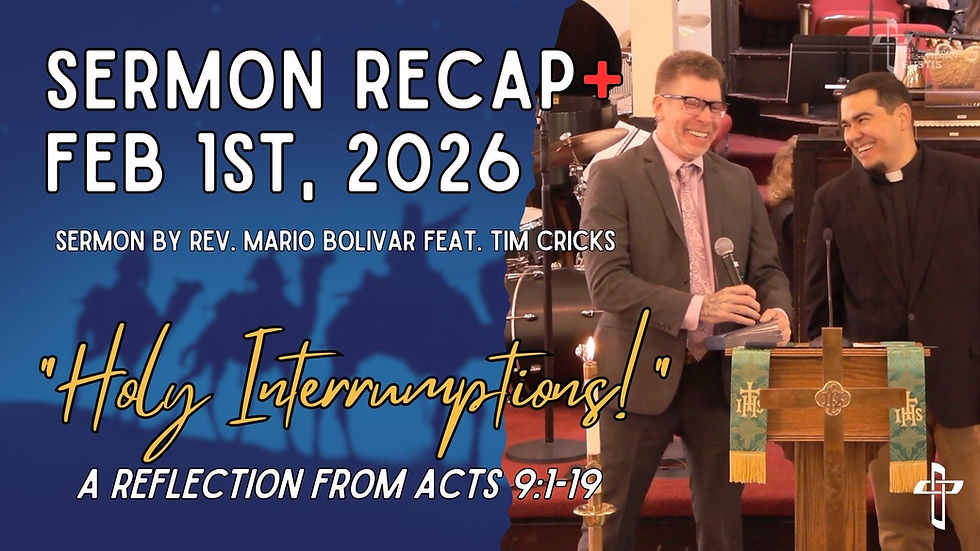
Sermon Recap+ Feb 1, 2026

Have you ever been so certain you were doing the right thing, only to discover you were completely wrong? The story of Saul's conversion on the road to Damascus reveals how God can interrupt our lives in the most unexpected ways, transforming our hearts and redirecting our purpose.
What Was Saul Really Doing?
Saul wasn't just casually disagreeing with early Christians. He had obtained official letters from the high priest, giving him authority to arrest, bind, and forcibly bring followers of "the Way" back to Jerusalem. He was systematically persecuting believers, convinced he was serving God faithfully.
This raises an uncomfortable question: Have you ever done something you believed was good but actually caused harm? Saul's story reminds us that sincere intentions don't always lead to righteous actions.
The Divine Encounter That Changed Everything
When Jesus appeared to Saul on the Damascus road, He asked a piercing question: "Saul, Saul, why do you persecute me?" (Acts 9:4). Saul thought he was persecuting followers of Jesus, but Jesus revealed that attacking His people was the same as attacking Him personally.
This encounter wasn't private. Saul's companions heard the voice but couldn't see what Saul saw. They witnessed his sudden blindness and had to lead him by the hand - a humbling experience for someone who had been so confident in his mission.
Was This Punishment or Awakening?
Saul's temporary blindness wasn't divine punishment but rather a consequence that led to awakening. Throughout Scripture, God allows consequences to help us recognize our need for Him. Like the Israelites in the wilderness, we often need to experience the results of our choices before we cry out for God's rescue.
Enter Ananias: The Reluctant Helper
God called Ananias to go to Saul and restore his sight. Ananias's response reveals both faith and honest concern: "Lord, I have heard from many about this man, how much evil he has done to your saints in Jerusalem" (Acts 9:13).
Ananias had factual evidence of Saul's persecution. His hesitation wasn't doubt but discernment. He felt comfortable enough with God to express his concerns, showing us that God welcomes our honest questions and feedback.
What Made Ananias Special?
Despite his concerns, Ananias said "Here I am, Lord" and ultimately obeyed. He represents those people God places in our lives to affirm our worth when we can't see it ourselves. An Ananias might be:
A trusted friend who speaks truth into your life
A stranger who offers encouragement at just the right moment
Someone at church who reaches out when you're struggling
Anyone who reminds you that you're not defined by your worst moments
What Does Conversion Really Look Like?
When Ananias laid hands on Saul, "immediately something like scales fell from his eyes" (Acts 9:18). This physical healing symbolized spiritual sight being restored. Conversion often feels like a weight being lifted, allowing us to see life from an entirely new perspective.
But God's call came with a sobering reality: "I myself will show him how much he must suffer for the sake of my name" (Acts 9:16). Transformation doesn't guarantee an easy life, but it does promise a purposeful one.
We All Have a Road to Damascus
Everyone faces moments when life doesn't go according to plan. You might think you have everything under control, only to have circumstances humble you and force you to reevaluate everything. These Damascus road experiences aren't accidents - they're opportunities for God to redirect our lives toward His purposes.
Which Role Are You Playing? In this story, you might be:
Saul : Experiencing a major life disruption that's actually God's intervention
Ananias : Called to encourage someone despite your reservations about their past
The companions : Witnessing God's work in someone's life without understanding it
Life Application
This week, challenge yourself to be an Ananias in someone's life. Look for opportunities to affirm someone's worth, especially someone who might be going through their own Damascus road experience. Remember that people aren't defined by their worst moments or their outward appearance.
Consider these questions:
Who in your life might need to hear that they're not garbage but have purpose?
Are you holding onto judgments about someone based on their past or appearance?
How might God be using current difficulties in your life to redirect your purpose?
When has someone served as an Ananias in your life, and how can you pay that forward?
The message is clear: with Christ, through Christ, and because of Christ, not everything has to be easy, but everything can be purposeful. God has a plan for your life, and He places people in your path both to help you and for you to help others along the way.


Comments